


Do no harm, Especially to market share
The global pharmaceutical company knew they’d end up in court. But instead of warning doctors and patients of the risks, they laid the groundwork for their defense.

In 2001, Dainis Lauris was diagnosed with chronic myeloid leukemia (CML). A year later, a second diagnosis: acute myelogenous leukemia (AML).
Dainis beat them both.
After aggressive chemotherapy, his AML went into permanent remission. Mr. Lauris’s CML was held in check too. His oncologist prescribed a tyrosine-kinase inhibitor (TKI) — a drug designed to repress the abnormal gene responsible for the disease. It worked.
The gene was nearly undetectable.
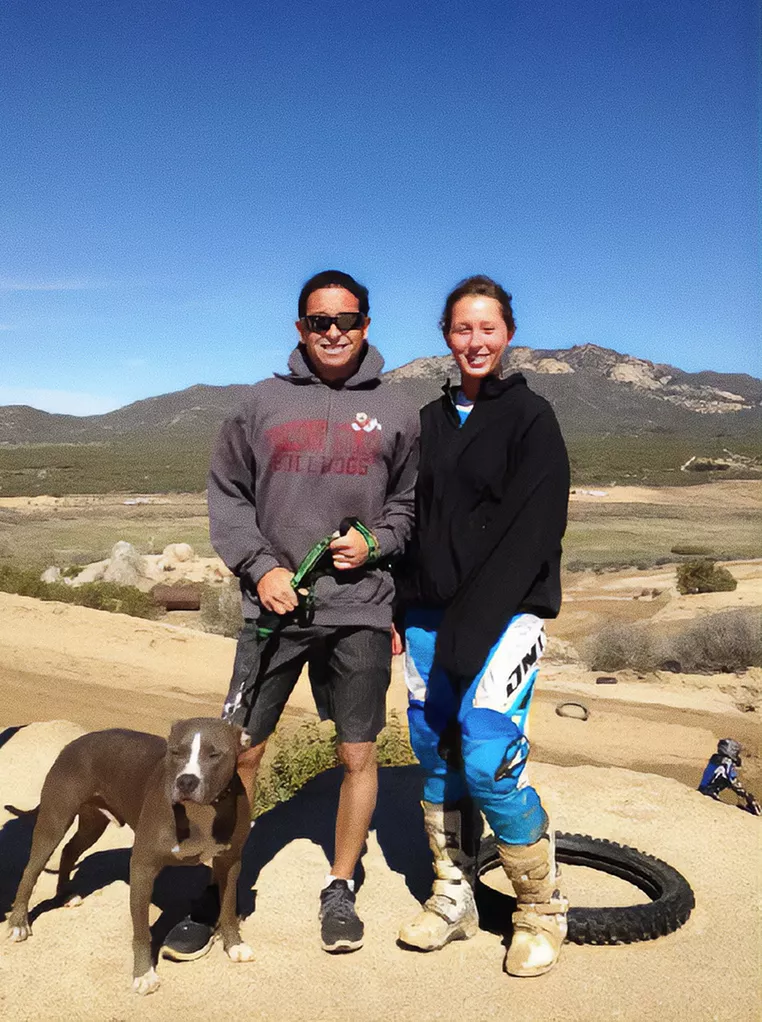
Dainis Lauris was cancer free from 2002 until his death in 2014.

He was active and healthy. He went horseback riding and was involved in motor-cross. He and his wife raised a family. Meanwhile, the drug that effectively blocked Mr. Lauris’s genetic predisposition to cancer was going off patent. The pharmaceutical company had another one waiting in the wings. They invested heavily in convincing doctors to prescribe this new drug at even the smallest sign of increased gene levels.
In late 2012, Dainis Lauris’s abnormal gene count edged up, ever-so-slightly. It was still less than 0.1%. Trace amounts. But his doctor trusted the counsel of the manufacturer. He switched Dainis to the new TKI.
Neither his oncologist nor Mr. Lauris were aware of the risks associated with this next generation drug. The pharmaceutical company was, but they didn't warn U.S. doctors or patients.
The company’s own medical investigators informed them of the potential for severe side effects. Peer-reviewed medical journals documented the same dangerous links. Public health agencies in Canada required the manufacturer to send “Dear Doctor” letters to prescribing physicians in that country, a common practice with risks of this magnitude.
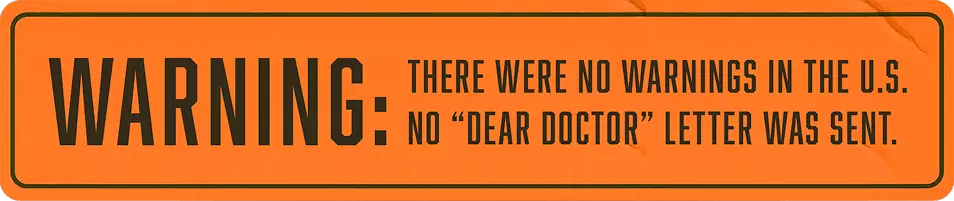


Under the “Warnings and Precautions” header in the product labeling: no indication of a threat.
In the “Highlights of Prescribing” section, one that typically informs doctors of such complications: again, nothing.
Under a list of “serious adverse reactions that can occur”:
still no mention.
Mr. Lauris’s oncologist had no idea that the drug Dainis was taking could cause rapid onset of severe atherosclerosis, a vascular disease that can lead to amputation, stroke, heart attack and death.
Nine months after starting this new TKI, Dainis started developing symptoms. They were minor at first, but progressed quickly.
Eight months later, on March 31, 2014, Dainis Lauris was pronounced dead.
He was 49.
We filed a wrongful death complaint against the global pharmaceutical company on behalf of Mr. Lauris’s surviving wife and family. The company asked the court for a summary judgment. They had teams of high-powered lawyers building their case. If granted, the summary judgment would have effectively dismissed the claim.
We weren’t intimidated. We fought back. And every single one of their arguments failed.
The Arguments
Mr. Lauris’s condition was rapidly deteriorating when his oncologist finally uncovered the link — on his own — between the new TKI and the peripheral vascular disease (PVD) that was blocking arteries in Dainis’s legs. It was November, 2013. He told Mr. Lauris to stop the drug immediately. The suit was filed in 2016. The 2-year statute had seemingly expired.
What the pharma company’s argument overlooked was that their drug caused multiple, distinct vascular diseases attacking separate parts of Mr. Lauris’s circulatory system.
The cause of the stroke that led to Dainis’s death was cerebrovascular disease (CVD) in the arteries leading to his brain.
He had also suffered a minor heart attack due to the weakening of carotid arteries.
These were not known until Mr. Lauris’s autopsy which was performed within 2 years of the filing.
The suit was not time-barred.
The defense argued to the contrary.
They claimed Mr. Lauris’s doctor did, in fact, know of the CVD at the same time as the PVD, that he admitted as much by discussing medical details of the cerebrovascular issues during deposition.
This attempt was flawed from the onset. Had it been true, Mr. Lauris’s medical team would have been treating him for cerebrovascular disease, which they never did. Not a single diagnostic test was run. No treatment administered. Dainis’s doctors had no reason to believe the issues extended beyond his legs.
His doctor was only able to comment on the specifics of his patient’s cerebrovascular disease in hindsight, with the benefit of an autopsy. The defense’s argument was a transparent attempt to twist the facts of the case.
The defense also argued that the multiple diseases were not separate and distinct, a position that wasn’t supported by any medical evidence.
The various types of vascular disease afflicting Mr. Lauris are diagnosed differently, treated differently and carry different risks.
What’s more, those with PVD do NOT typically present with a secondary condition of CVD or carotid arterial disease.
The separate vascular diseases developed independently of one another, connected only because they were both caused by the same defective drug.
The defense’s attempt at summary judgment on this issue failed.
The company attempted to escape liability, arguing that they had no duty to warn of the deadly side effect because the FDA did not make them.
This argument failed on its face. The United States Supreme Court had already set a precedent: the duty to warn of deadly side effects is the manufacturer’s responsibility, not the FDA’s.
What’s more, the reason the FDA did not require a warning sooner was because the company misled it about the strong evidence supporting an association between the drug and the deadly side effect.
To attempt to cover itself, the manufacturer did include the words “peripheral arterial occlusive disease” and “intracranial hemorrhage” in a remote section of the product labeling. This was not the section reserved for “Warnings and Precautions.” Nor was it the “Highlights of Prescribing Information” section that doctors often rely on. These risks also weren’t outlined in the section covering “serious adverse reactions that can occur” while taking the drug.
Instead, the words were buried in a list reserved for other, often benign and uncommon, side effects. In undifferentiated type, these severe threats were hidden among more than 200 other conditions such as flatulence, gingivitis and dry skin. Importantly, the side effects listed here were claimed to have occurred in less than 1% of patients.
The pharma company supported this label update with a single study, the only one they admitted having. In that research, the vascular threat was rare. They asked the FDA if a “Dear Doctor” letter was needed. Based on the data presented, the FDA declined to require such a measure.
That’s because the drug company wasn’t disclosing everything they knew.
They were in possession of at least one other, peer-reviewed, study. It was formally submitted by their own medical investigators. In it, the results and warnings were much more dire. As many as 33% of the patients studied developed vascular issues, far exceeding the <1% threshold in the product labeling.
The scientists leading the research urged the company to notify prescribing physicians. Instead, the manufacturer attempted to squash the report and withheld its findings from health authorities.
The company intentionally deceived the FDA so that they could eventually argue that the FDA hadn’t required them to do more. They knew they’d end up in court, and they continued to mislead doctors, patients and the FDA en route.
Their argument failed, and the court denied their motion for summary judgment on this issue.
This argument was based on a lie, and on the company’s refusal to disclose relevant research to the FDA. They thought they could hide behind the FDA’s guidance even when it was based on the company's misrepresentations to the FDA.
It failed, perhaps most notably because — in the intervening time between Mr. Lauris’s death and the court filing — the FDA became aware of additional evidence showing a strong association between the side effect and the drugs. It demanded that the company update the product labels in the very manner that the defense claimed the FDA would never approve.
The Results
Summary judgment was denied, and the case was settled confidentially. If the Lauris family can take solace from any part of this tragedy, it might be this: Their case was the first in what became a multi-district litigation involving more than 300 similar cases.
They helped show others that it’s possible to fight Goliath.
Elias Law continues to represent these victims and their families, as co-lead counsel.